MoistureShield Composite Decking: Costs, Colors, CoolDeck

If you're building or replacing a deck in the Pacific Northwest, the material you choose has to hold up against rain, moisture, and temperature swings, no exceptions. MoistureShield composite decking is one of the few brands engineered specifically to handle ground contact and prolonged moisture exposure, which makes it a serious contender for homeowners across the Kirkland, Bellevue, Redmond, and greater Seattle areas. But does the performance actually match the marketing? And is it worth the investment compared to other composite brands?
At Legacy Exteriors LLC, we design and build custom decks for Washington homeowners, and we've seen firsthand how material choice affects a deck's longevity in our climate. That hands-on experience is exactly why we put together this breakdown, to give you real, practical information before you commit to a product and a price point.
This article covers MoistureShield's product lines, CoolDeck technology, available colors, cost ranges, and how it stacks up against competitors like Trex and TimberTech. Whether you're early in your research or narrowing down a final decision, you'll walk away with what you need to make a confident choice.
Why MoistureShield stands out for composite decks
Most composite decking brands require you to keep boards elevated above grade and away from standing water. MoistureShield takes a different approach. Its boards are engineered for full ground contact and submerged use, which means they hold up in conditions that would cause other composites to swell, warp, or degrade. For Washington homeowners dealing with wet winters and moisture-prone yards, that distinction matters more than most marketing claims.
CoolDeck technology
One of the most common complaints about composite decking is how hot it gets in direct sunlight. MoistureShield addresses this with CoolDeck technology, a proprietary treatment that reflects infrared radiation so the board surface stays significantly cooler than standard composite options. In side-by-side testing, CoolDeck boards have measured up to 35°F cooler than competing composite products under the same sun exposure.
If your deck faces south or gets heavy afternoon sun, CoolDeck technology alone may justify choosing MoistureShield over other brands.
Solid-core construction and moisture resistance
MoistureShield composite decking uses a solid-core board design rather than hollow profiles, which adds structural rigidity and reduces the risk of surface denting over time. The wood fiber inside is fully encapsulated within a protective shell, so moisture cannot penetrate to the core even when the board sits at ground level or in contact with soil. This is the feature that separates MoistureShield from most competitors, and it's especially relevant if you're planning a low-profile deck, a boardwalk-style path, or a ground-level installation where drainage is limited.
Your deck's lifespan depends heavily on how well the material handles your specific site conditions. Choosing a board rated for ground contact gives you significantly more placement flexibility, and fewer long-term maintenance concerns compared to boards that require elevated framing and strict airflow clearances.
How to choose the right MoistureShield boards
Your deck's location and use case should drive your board selection before you think about aesthetics or price. MoistureShield composite decking comes in several product lines, and each targets different performance priorities. Matching the right line to your site conditions saves you money and avoids buying more board than your project actually requires.
Match the board to your install conditions
If your deck sits close to the ground or in a shaded, low-drainage area, you want boards rated for ground contact, such as those in the Vision or Vantage lines. For elevated decks with good airflow, boards in the Pro or Meridian series deliver strong performance at a lower price point. Think about sun exposure too: decks with direct afternoon sun benefit most from lines that include CoolDeck technology, and that feature is worth prioritizing if heat retention is a concern for your space.
Knowing your deck's drainage situation before you select a product line will save you from choosing a board that's either overkill or underbuilt for your conditions.
Consider traffic level and board profile
High-traffic decks benefit from solid-core boards, which resist denting and surface wear better than hollow alternatives. You should also decide between grooved-edge boards, which accept hidden fasteners for a cleaner finished look, and square-edge boards, which pair with traditional face screws and typically cost a bit less per linear foot.
MoistureShield costs, warranties, and long-term value
MoistureShield composite decking typically runs $4 to $9 per linear foot for boards alone, depending on the product line. Entry-level lines like Vantage sit at the lower end, while premium options with CoolDeck technology push toward the higher end. Installation labor adds $15 to $35 per square foot in most Washington markets, so budget both figures before you commit to a product tier.
Understanding the warranty tiers
The brand backs its products with warranties ranging from 25 years on standard lines to a lifetime limited warranty on premium boards. Before you select a product, read the warranty terms carefully, since some coverage applies only to residential use and requires documented proper installation.
Standard lines: 25-year limited warranty
Premium lines: Lifetime limited warranty
Coverage includes: fading, staining, and structural defects
A stronger warranty signals manufacturer confidence in long-term durability, which directly reflects the value you receive over a 20-plus-year deck lifespan.
Total cost versus upfront price
Long-term cost of ownership is the number that actually matters here. MoistureShield boards require no staining, sealing, or annual treatments, which saves you hundreds of dollars per year compared to pressure-treated wood. That maintenance savings compounds quickly and often offsets the higher upfront material cost within the first few years.
Colors, textures, and popular MoistureShield lines
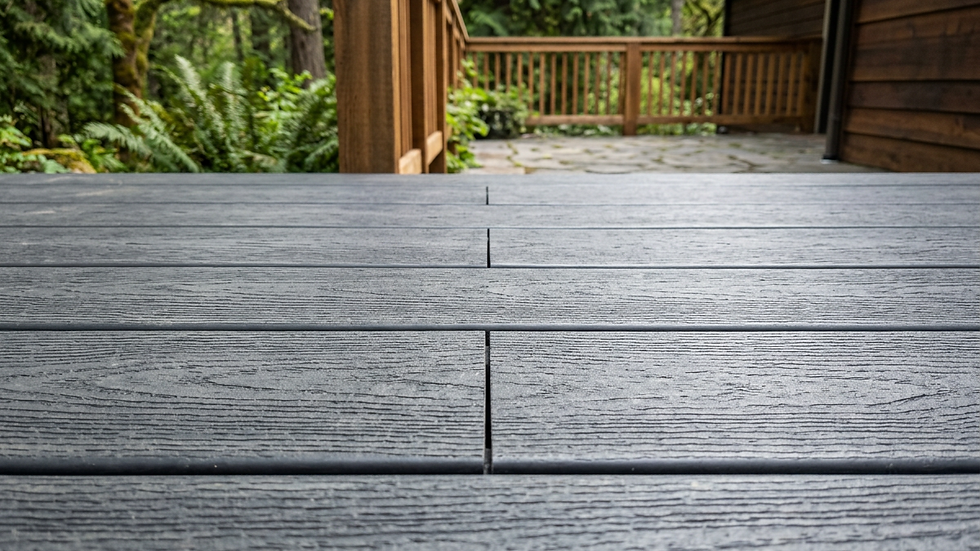
MoistureShield composite decking offers a range of earth-toned and gray-palette colors that replicate natural wood grain without requiring any surface treatment. Most lines feature embossed wood-grain textures on one or both faces, giving you a realistic look that holds up through years of foot traffic and Pacific Northwest weather.
Color families and finish options
The brand organizes its color options into warm browns, cool grays, and variegated natural tones. Darker shades like Walnut and Chocolate suit shaded or north-facing decks well, while lighter options like Sandstone and Driftwood keep surface temperatures lower on sun-exposed builds.
If you want cooler surface temps and a lighter aesthetic, pairing a lighter color with CoolDeck technology gives you the strongest heat-reduction result.
Most popular product lines
MoistureShield's most recognized lines include Vision, which combines ground-contact capability with CoolDeck technology, and Vantage, a more budget-friendly option that still delivers solid moisture resistance. The Pro series targets elevated deck builds where ground contact is not a priority but finish quality and durability still matter.
Vision: Premium tier, CoolDeck, ground-contact rated
Vantage: Mid-range, moisture resistant, wide color selection
Pro: Elevated installs, strong performance-to-cost ratio
Where to buy MoistureShield and plan install details
You can purchase MoistureShield composite decking through major home improvement retailers like The Home Depot and Lowe's, both of which stock select product lines and can ship directly to your job site. For specialty lines like Vision or Pro, a local lumber yard or building supply distributor often gives you access to the full product catalog and better bulk pricing.
Distributor pricing on larger deck orders frequently beats big-box retail rates, so get quotes from both sources before you commit.
Installation planning essentials
Framing requirements and fastener type vary by board line, so review the installation guide for your specific product before your contractor finalizes the material order. Ground-contact installs require pressure-treated joists and precise joist spacing to keep your warranty coverage intact.
Your installer should also confirm ventilation clearances and substructure material requirements specific to your chosen line, since those details affect both long-term performance and warranty compliance.
Working with a deck contractor
Giving your contractor the board line name, color choice, and a clear site description upfront eliminates back-and-forth and speeds up the estimate. Share the product specs sheet from the manufacturer's website so your installer can verify fastener compatibility and confirm correct spacing before work begins.
Next steps for your deck
You now have a clear picture of what MoistureShield composite decking delivers, from its ground-contact moisture resistance and CoolDeck technology to product line options, color ranges, and real cost expectations. The next move is matching that information to your specific yard, budget, and build goals before you finalize any material order or sign a contract.
Start by assessing your site conditions, particularly drainage, sun exposure, and how close to grade your deck will sit. Those three factors narrow your product line choice fast. Once you have a board line in mind, pull the manufacturer's installation specs and share them with your contractor upfront so there are no surprises during the build.
If you're ready to get a professional estimate for your deck project, the team at Legacy Exteriors LLC is here to help. Request a free deck quote and we'll walk through your options with you.