TimberTech Composite Decking: Cost, Pros, Cons, and How It Compares to Trex

Updated: 6 days ago
If you're planning a new deck, there's a good chance TimberTech composite decking has come up in your research. It's one of the most recognized names in the composite decking space, and for good reason, TimberTech offers multiple product lines at different price points, each with distinct performance and aesthetic characteristics worth understanding before you commit.
But sorting through the options isn't always straightforward. How do TimberTech's lines actually differ from each other? What does it cost installed? And how does it stack up against Trex, the other brand that dominates the conversation? These are the questions we hear regularly from homeowners across Kirkland and the surrounding areas when they're weighing their decking options. At Legacy Exteriors LLC, custom deck design and construction is a core part of what we do, and we've installed enough composite decking to know which products hold up and which ones overpromise.
This article breaks down TimberTech's product lines, real-world pros and cons, installed costs, and a head-to-head comparison with Trex, so you can make a confident, informed decision about your next deck project.
What TimberTech composite decking is
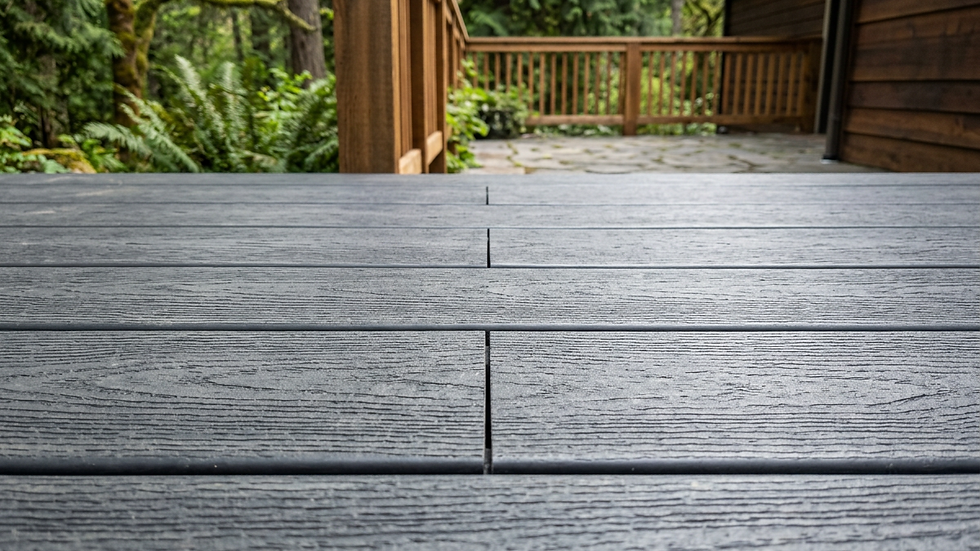
TimberTech composite decking is a manufactured decking product made by combining wood fiber and polymer materials into boards that mimic the look of natural wood while resisting the problems that come with it: rot, splintering, fading, and insect damage. The brand falls under the AZEK Building Products umbrella, a company with a long track record in exterior building materials. AZEK itself is now part of James Hardie, which completed its acquisition in 2025, but the TimberTech brand and product lines carry on. TimberTech's decking lines range from entry-level capped composite to fully capped PVC boards, giving you real flexibility depending on your budget, aesthetic goals, and how much long-term maintenance you're willing to do.
The core materials and construction
Every TimberTech board uses one of two foundational constructions: capped composite or capped PVC. Capped composite boards have a wood-polymer core wrapped in a protective polymer shell. This shell is what sets modern composite apart from the first-generation composites that were prone to mold and fading. Capped PVC boards, found in TimberTech's higher-end lines, use a fully synthetic core with no wood fiber at all, which makes them more resistant to moisture absorption and better suited to wet climates.
The cap layer on composite boards is the single biggest factor in long-term performance. Without it, wood fiber in the core absorbs moisture and breaks down over time.
The capping process bonds a hard outer layer directly to the board's core during manufacturing. This isn't a coating that can peel off the way paint or stain would. It becomes part of the board's structure. That distinction matters when you're comparing products, because not all composite brands use full-wrap capping, which leaves the board's underside and cut ends exposed to moisture.
How it differs from wood decking
Natural wood decking, whether pressure-treated pine or premium cedar, requires ongoing maintenance every one to two years in the form of sealing, staining, or painting to hold up against weather. Skip that maintenance cycle and you're looking at cracking, warping, and accelerated rot. Composite decking sidesteps most of that. You clean it with soap, water, and a soft brush a couple of times a year, and that's typically all it needs under normal conditions.
Wood also carries inconsistencies in grain, knots, and color that some homeowners love and others don't want to deal with. TimberTech engineered boards offer a consistent look across your deck surface, which is a real advantage when you're working with a specific design plan. That said, wood has a natural warmth and feel underfoot that composite boards, depending on the line, don't always replicate exactly. Knowing which qualities matter most to you will guide you toward the right product.
TimberTech's place in the market
TimberTech has been manufacturing composite decking since the 1990s, which gives it a longer performance track record than many newer brands entering the market. AZEK acquired TimberTech in 2012, and since then the product lines have expanded significantly. The brand now covers a wide spectrum of price points, from its EDGE series aimed at budget-conscious buyers to its Advanced PVC collections (Landmark, Vintage, and Harbor) aimed at homeowners who want the most durable, premium product available.
This range is both an asset and a source of confusion. When someone asks whether TimberTech composite decking is worth it, the honest answer is that it depends heavily on which line you're actually comparing. The materials, warranties, and performance expectations differ significantly across the lineup, which is exactly why understanding the product tiers matters before you make any purchasing decisions.
TimberTech composite lines and how to choose
TimberTech decking comes in distinct tiers, and knowing what separates them saves you from either overpaying for features you don't need or underspending on a board that won't hold up in your specific conditions. The full lineup spans from budget-friendly capped composite to fully synthetic PVC boards, with each tier carrying different core materials, warranty lengths, and performance thresholds that directly affect your long-term outcome.
The four main product tiers
TimberTech currently markets four primary groupings. The EDGE series is the entry point, built with a capped composite construction that offers solid protection at the lowest price in the lineup. Moving up, the PRO series (which includes the Terrain and Legacy collections) adds richer color options and a more refined surface texture that more closely mimics natural wood grain. The RESERVE collection, part of the PRO family, steps into premium capped composite territory with deeper color variation, wider boards, and enhanced scratch and stain resistance. At the top sit the Advanced PVC collections, including Landmark, Vintage, and Harbor, which use a fully synthetic core with zero wood fiber, making them the most moisture-resistant options in the lineup.
Collection | Core Type | Best For |
|---|---|---|
EDGE | Capped composite | Budget-focused projects |
PRO | Capped composite | Mid-range residential decks |
RESERVE | Premium capped composite | High-aesthetic outdoor spaces |
Advanced PVC | Fully capped PVC | Wet climates, long-term investment |
If you're building in the Pacific Northwest, the Advanced PVC collections deserve serious consideration because their fully synthetic core handles persistent moisture and rain exposure better than any wood-fiber composite.
How to match the right line to your project
Your location, usage level, and aesthetic goals should drive the decision more than the price tag alone. If your deck gets heavy foot traffic, faces direct sun for most of the day, or sits close to water, stepping up to a higher-tier board pays off over time. Fading, surface wear, and moisture damage are all significantly reduced in the RESERVE and Advanced PVC collections, which carry longer fade and stain warranties than the EDGE line.
For homeowners focused on budget but still wanting the benefits of timbertech composite decking over wood, the EDGE or PRO series delivers real value as long as the deck has proper ventilation underneath and isn't in direct contact with standing water. Match the product tier to your actual site conditions, not just your initial budget, and you'll avoid the common mistake of replacing boards far sooner than expected.
Pros and cons for real-world deck use
No decking product is right for every situation, and timbertech composite decking is no exception. Understanding where it genuinely performs well and where it has real limitations helps you avoid surprises after installation, when it's far too late to change your mind.
Where TimberTech holds up well
The most consistent advantage you'll get from TimberTech is low maintenance over a long service life. Unlike wood, you won't be scheduling annual staining or sealing cycles. A seasonal wash with soapy water handles the bulk of upkeep, which matters especially when you factor in the cumulative cost and effort of maintaining a wood deck over a decade. The boards also hold their color well. TimberTech's capped construction resists UV-driven fading more effectively than uncapped composite or untreated wood, which makes a real visual difference several years into the product's life.
Homeowners in rainy climates like the Pacific Northwest benefit most from the capped core construction, which blocks moisture from reaching the wood fiber inside the board.
Structural stability is another genuine strength. TimberTech boards resist warping, cupping, and cracking under temperature swings better than natural wood, which expands and contracts significantly with seasonal changes. You also get a consistent appearance across the entire deck surface, which simplifies design work and ensures your boards look uniform even when you add sections later.
Where the limitations show up
The biggest practical drawback is surface heat retention. Composite boards, especially darker colors, absorb more heat than wood when exposed to direct sun for extended periods. On a hot summer afternoon, darker TimberTech boards can become uncomfortable to walk on barefoot. If your deck faces south and gets full afternoon sun, lighter color options reduce this effect, but they don't eliminate it entirely.
Cost is the second limitation worth naming directly. TimberTech carries a higher upfront price than pressure-treated wood, and the installed cost increases significantly as you move up through the product lines toward the Advanced PVC collections. The long-term math often favors composite when you factor in avoided maintenance costs, but the initial investment is real and needs to fit your project budget.
Scratches and scuffs are also visible on composite boards, particularly on smoother surface profiles. Heavy furniture dragged across the deck or sharp debris underfoot can leave marks that don't disappear the way they might on wood that you sand and refinish.
Cost, maintenance, and long-term value
Understanding what timbertech composite decking actually costs, and what it saves you over time, gives you a clearer picture than the upfront price tag alone. The installed cost and the avoided maintenance expenses together determine whether the investment makes sense for your specific project.
What you'll pay upfront
Material costs for TimberTech boards range from roughly $4 to $12 per linear foot depending on which collection you choose, with the EDGE series sitting at the lower end and the Advanced PVC collections at the upper range. Installation adds labor, hardware, framing, and finish work on top of that. For a typical 400-square-foot deck, total installed costs generally land between $15,000 and $30,000, though larger or more complex builds push those numbers higher.
Collection | Approx. Material Cost (per linear foot) |
|---|---|
EDGE | $4 to $6 |
PRO | $5 to $7 |
RESERVE | $7 to $10 |
Advanced PVC | $9 to $12 |
Material pricing fluctuates with supply chain conditions, so treat any estimate as a starting point until you have a written, locked-in quote from your contractor.
What maintenance actually costs
Maintenance for TimberTech boards is straightforward and inexpensive compared to wood. Expect to spend a few hours twice a year cleaning the surface with a mild soap solution and a soft-bristle brush. You won't need to budget for stain, sealant, or professional deck restoration, which for a comparable wood deck can run $500 to $1,500 or more every one to two years depending on deck size and local labor rates.
Skipping that annual maintenance cycle on a wood deck doesn't just look bad, it leads to cracking, warping, and accelerated rot that shortens the deck's lifespan significantly. Composite eliminates that pressure entirely.
How the long-term math works
Over a 10-year window, a wood deck's maintenance costs can easily add up to more than the price difference between wood and composite. A pressure-treated pine deck might cost less upfront, but annual sealing, staining, and occasional board replacement narrow that gap quickly. TimberTech boards carry fade and stain warranties ranging from 25 years on the EDGE line to a 50-year limited warranty on the Advanced PVC collections, which signals clearly how long the manufacturer expects each product to perform without major intervention.
Balancing your initial budget against long-term savings means picking the collection that fits both your site conditions and your realistic maintenance tolerance over the years ahead.
TimberTech vs Trex for Pacific Northwest homes
Both TimberTech and Trex dominate the composite decking market, and the comparison comes up constantly when Pacific Northwest homeowners are making their final decision. The region's persistent rain, high humidity, and extended wet seasons make moisture performance the single most important factor in that comparison, not aesthetics or price alone.
How the two brands handle moisture
TimberTech and Trex both use capped composite construction across most of their product lines, but they differ in how their top-tier products are built. Trex's highest-tier boards still use a wood-fiber composite core, while TimberTech's Advanced PVC collections use a fully synthetic core with no wood fiber at all. For a region that sees 150 or more days of rainfall annually, that distinction carries real weight. A board with no wood fiber has no material that absorbs moisture over time, which directly reduces the risk of swelling, mold growth, and structural degradation.
In the Pacific Northwest, TimberTech's fully synthetic PVC core option gives it a technical advantage over Trex at the premium tier, where moisture exposure is the deciding factor.
How the two brands compare on warranty and cost
Both brands offer competitive warranties, but the specifics differ meaningfully. Trex's Transcend line carries a 25-year fade and stain warranty, while TimberTech's Advanced PVC collections offer a 50-year limited fade and stain warranty. That difference matters if you're building a deck you expect to perform for decades without major intervention.
On cost, Trex and TimberTech sit in a similar price range across comparable tiers, with neither brand consistently undercutting the other by a significant margin. The real cost difference comes from which tier you select, not which brand name is on the board. Comparing boards at the same performance level, rather than simply the same price point, gives you a much more accurate picture before you commit.
Factor | TimberTech Advanced PVC | Trex Transcend |
|---|---|---|
Core type | Fully synthetic PVC | Capped wood-fiber composite |
Fade and stain warranty | 50 years limited | 25 years |
Moisture resistance | Highest | High |
Price tier | Premium | Premium |
For Pacific Northwest homeowners specifically, timbertech composite decking at the Advanced PVC tier provides a structural advantage that Trex's premium line doesn't match, primarily because of the synthetic core. At a mid-tier price point, both brands perform comparably, and the decision often comes down to color selection and board profile preferences rather than performance differences.
How to plan, buy, and install it
Getting from a deck idea to finished boards underfoot involves three distinct phases: planning your design and specs, sourcing the material, and coordinating installation. Each phase has specific decisions that affect your final cost, timeline, and outcome, so working through them in order prevents expensive mistakes later.
Planning your deck layout and specs
Before you contact a supplier or contractor, establish your deck's dimensions, intended use, and framing requirements. The size of your deck determines how many linear feet of board you need, and the intended traffic level influences which TimberTech product tier makes sense. For residential use in wet climates like Kirkland, plan for proper drainage by designing your deck with slight pitch and adequate board spacing, typically around 3/16 inch, to allow water to run off rather than pool.
You also need to confirm your local permit requirements early. Most decks over a certain square footage or height require a building permit, and the permit process shapes your construction timeline directly.
Where to buy TimberTech boards
TimberTech composite decking is available through authorized dealers, home improvement retailers, and specialty lumber yards. For the most complete product selection, particularly the RESERVE and Advanced PVC collections, an authorized TimberTech dealer will carry more options than a general hardware store. You can search for local dealers directly through TimberTech's official website. Buying through an authorized dealer also ensures your boards come with full warranty coverage, which matters when you're investing in a premium product tier.
Always purchase a few extra boards beyond your calculated square footage to account for cuts, waste, and future repairs without needing to match a discontinued color run later.
What installation involves
Installing composite deck boards requires a properly built subframe, typically pressure-treated lumber, that supports the boards at the spacing intervals the manufacturer specifies. Hidden fastener systems, which clip into the board edges rather than face-screw through the surface, produce a cleaner finished look and protect board faces from fastener-related splitting over time. TimberTech's proprietary fastener systems are designed specifically for their board profiles, so using compatible hardware matters for both appearance and warranty compliance.
Working with a professional installer familiar with TimberTech's installation guidelines reduces the risk of warranty-voiding errors and ensures your subframe handles the specific load and span requirements of your chosen board collection.
Simple next step for your deck plan
You now have a clear picture of what timbertech composite decking offers across its product lines, how it compares to Trex, what it costs, and what the installation process looks like. The next step is converting that knowledge into a concrete plan for your specific property. The right board tier, framing spec, and layout depend on your site conditions, your usage goals, and the budget you're working with, and those details are best sorted out with a contractor who knows the product.
At Legacy Exteriors LLC, we build custom decks for homeowners across Kirkland and the surrounding area, and we're familiar with TimberTech's full product lineup from materials through installation. If you're ready to move from research to an actual quote, schedule a free consultation with our deck team and we'll walk through your project from start to finish with no pressure and no surprises.