


Deck Board Replacement Cost Explained
- Ryan Tichy

- Aug 6
- 4 min read
Replacing deck boards is a common home maintenance task that many homeowners in the Seattle area, including Kirkland, Bellevue, Bothell, and Redmond, face at some point. Whether your deck boards are warped, rotting, or simply outdated, understanding the deck board replacement cost is essential before starting your project. In this post, I’ll walk you through the factors that influence the cost, what you can expect to pay, and how to make the best decisions for your home.
What Influences Deck Board Replacement Cost?
When considering deck board replacement, several factors come into play that affect the overall price. Knowing these will help you budget accurately and avoid surprises.
1. Type of Deck Board Material
The material you choose for your deck boards has a significant impact on cost. Here are some common options:
Pressure-Treated Wood: This is the most affordable and widely used option. It’s treated to resist rot and insects but requires regular maintenance.
Cedar or Redwood: These natural woods are more expensive but offer better aesthetics and durability.
Composite Decking: Made from recycled wood fibers and plastic, composite boards are low-maintenance and long-lasting but come with a higher upfront cost.
PVC Decking: The most expensive option, PVC decking is highly durable and resistant to moisture and fading.
2. Size of the Deck
The larger your deck, the more boards you’ll need to replace, which increases material and labor costs. For example, a 12x12 deck will require more materials and time than a smaller 8x8 deck.
3. Condition of the Existing Deck
If your deck frame or joists are damaged, they may need repair or replacement before installing new boards. This adds to the overall cost but is crucial for safety and longevity.
4. Labor Costs
Labor rates vary depending on the complexity of the job and local market rates. Skilled contractors in the Seattle area typically charge more than general handymen, but you get quality workmanship and peace of mind.
5. Removal and Disposal
Removing old deck boards and disposing of them properly is part of the project cost. Some contractors include this in their estimate, while others charge separately.
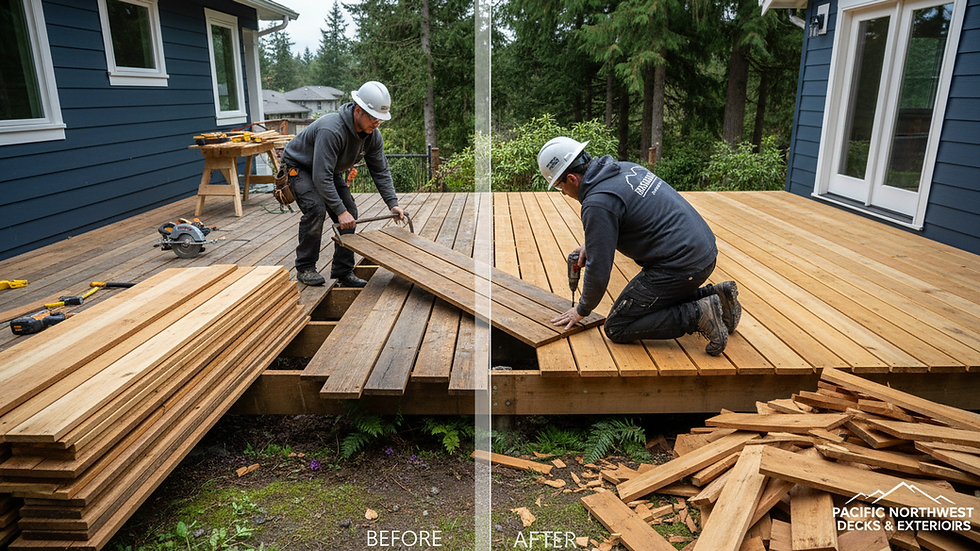
Understanding Deck Board Replacement Cost in Seattle Area
In the Seattle metro area, including Kirkland, Bellevue, Bothell, and Redmond, prices can vary based on local demand and availability of materials. Here’s a rough breakdown of what you might expect:
Pressure-Treated Wood: $15 to $25 per square foot installed
Cedar or Redwood: $25 to $35 per square foot installed
Composite Decking: $30 to $45 per square foot installed
PVC Decking: $40 to $60 per square foot installed
These prices include materials, labor, and disposal but can fluctuate based on the specifics of your project.
If you want a detailed estimate tailored to your deck size and material preferences, it’s best to consult with a local contractor who understands the Seattle climate and building codes.
How much is labor for a 12x12 deck?
Labor costs for replacing deck boards on a 12x12 deck typically range from $800 to $1,500 depending on the complexity of the job and the contractor’s rates. This estimate includes:
Removing old boards
Inspecting and repairing the deck frame if needed
Installing new deck boards
Cleanup and disposal of debris
Labor costs can be higher if your deck has intricate designs, multiple levels, or requires special permits. On the other hand, straightforward replacements on a flat deck will be on the lower end of the scale.
Hiring a professional ensures the job is done safely and up to code, which is especially important in the Seattle area where weather conditions can affect deck longevity.

Tips to Save on Deck Board Replacement Costs
Replacing deck boards doesn’t have to break the bank. Here are some practical tips to help you save money without sacrificing quality:
Choose Durable Materials: While composite or PVC decking costs more upfront, they require less maintenance and last longer, saving you money over time.
Do Some Prep Work Yourself: If you’re comfortable, removing old boards or cleaning the deck frame before the contractor arrives can reduce labor hours.
Get Multiple Quotes: Contact several local contractors to compare prices and services. Look for transparency and detailed estimates.
Schedule During Off-Season: Contractors may offer discounts during slower months, typically in late fall or winter.
Maintain Your Deck Regularly: Preventative maintenance can extend the life of your deck boards and delay the need for replacement.
Why Quality Workmanship Matters
When it comes to deck board replacement, quality workmanship is crucial. Poor installation can lead to:
Premature board warping or cracking
Unsafe deck structure
Water damage and rot
Voided warranties on materials
Choosing a contractor who prioritizes quality and transparency ensures your deck will be safe, beautiful, and durable for years to come. In the Seattle area, where moisture and weather changes are common, proper installation and material choice are even more important.
Getting Started with Your Deck Board Replacement
If you’re ready to replace your deck boards, here’s a simple plan to get started:
Assess Your Deck: Identify which boards need replacement and check the condition of the frame.
Choose Your Material: Decide on the type of decking that fits your budget and lifestyle.
Request Estimates: Contact trusted local contractors for detailed quotes.
Schedule the Work: Plan the project timing to fit your schedule and weather conditions.
Prepare Your Space: Clear the deck area and make arrangements for pets or children during the work.
By following these steps, you’ll be well on your way to enjoying a refreshed, safe, and attractive deck.
For more detailed information on the cost to replace deck boards, feel free to explore trusted local resources or reach out to professionals in your area.
Replacing deck boards is an investment in your home’s safety and curb appeal. With the right information and a trusted contractor, you can confidently navigate the process and enjoy your outdoor space for many seasons to come.


