Deck Board Replacement Cost Explained
- Ryan Michael
- 3 hours ago
- 4 min read

Replacing deck boards is a common home maintenance task that many homeowners in the Seattle area, including Kirkland, Bellevue, Bothell, and surrounding communities, face at some point. Whether your deck boards have suffered from weather damage, rot, or general wear and tear, understanding the deck board replacement cost is essential before starting your project. In this post, I’ll walk you through the key factors that influence the cost, what you can expect to pay, and how to make smart choices that protect your investment and enhance your outdoor living space.
What Influences Deck Board Replacement Cost?
When considering deck board replacement, several factors come into play that affect the overall price. Knowing these will help you plan your budget and avoid surprises.
Type of Deck Board Material
The material you choose for your deck boards significantly impacts the cost. Here are some common options:
Pressure-Treated Wood: This is the most affordable option and widely used in the Seattle area. It offers decent durability but requires regular maintenance.
Cedar or Redwood: These woods are naturally resistant to rot and insects, offering a more attractive finish but at a higher price point.
Composite Decking: Made from a blend of wood fibers and plastic, composite boards are low-maintenance and long-lasting but come with a higher upfront cost.
PVC Decking: Fully synthetic, PVC decking is highly durable and resistant to moisture and insects but is usually the most expensive option.
Size and Scope of Replacement
The size of your deck and the number of boards needing replacement will directly affect the cost. For example, replacing a few damaged boards is much less expensive than a full deck board replacement.
Accessibility and Deck Design
If your deck has multiple levels, built-in benches, or intricate designs, the labor involved will be more complex and time-consuming, increasing the cost.
Local Labor Rates
Labor costs vary by region. In the Seattle metro area, including Kirkland, Bellevue, and Bothell, labor rates tend to be higher than the national average due to the cost of living and demand for skilled contractors.

Understanding Deck Board Replacement Cost in Seattle Area
In the Seattle area, the deck board replacement cost typically ranges between $15 and $35 per square foot, depending on the factors mentioned above. Here’s a breakdown of what you might expect:
Pressure-Treated Wood: $15 - $20 per square foot
Cedar or Redwood: $20 - $30 per square foot
Composite Decking: $25 - $35 per square foot
PVC Decking: $30 - $40 per square foot
These prices usually include both materials and labor. However, keep in mind that additional costs may arise if your deck requires structural repairs or if you want to upgrade fasteners and hardware.
If you want a detailed estimate tailored to your specific deck, you can check out the cost to replace deck boards for more information.
Additional Costs to Consider
Disposal Fees: Removing old deck boards and hauling them away can add to your total cost.
Permits: Some cities in the Seattle metro area require permits for deck work.
Finishing: Staining or sealing new wood boards will add to the overall expense but is essential for longevity.
How much is labor for a 12x12 deck?
Labor costs for replacing deck boards on a 12x12 deck can vary, but here’s a general idea based on local rates:
Basic labor for board replacement: $500 - $900
Additional labor for complex designs or repairs: $900 - $1,500
This estimate includes removing old boards, installing new ones, and basic cleanup. Labor costs can fluctuate depending on the contractor’s experience, the deck’s condition, and the time of year.
Tips to Manage Labor Costs
Bundle projects: If you need other exterior work done, combining projects can sometimes reduce labor costs.
Schedule during off-peak seasons: Contractors may offer better rates during slower months.
Get multiple quotes: Always compare estimates from trusted local contractors to ensure you’re getting fair pricing.
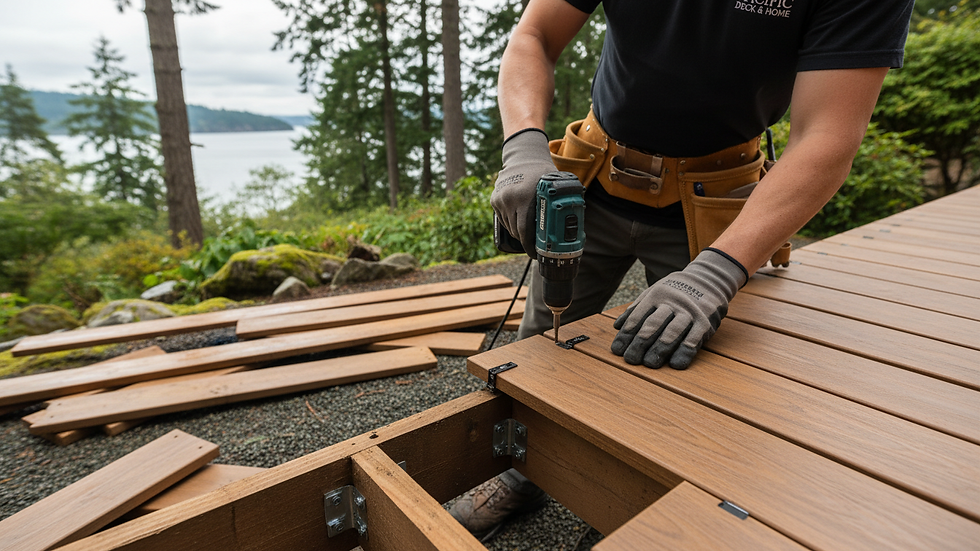
Choosing the Right Deck Board Material for Your Home
Selecting the right material is crucial for balancing cost, durability, and appearance. Here’s how to decide:
Pressure-Treated Wood
Pros: Affordable, widely available, easy to work with.
Cons: Requires regular sealing and maintenance to prevent rot and splintering.
Best for: Homeowners on a budget who don’t mind periodic upkeep.
Cedar or Redwood
Pros: Naturally resistant to decay, beautiful grain and color.
Cons: More expensive than pressure-treated wood, still requires maintenance.
Best for: Those wanting a natural wood look with better longevity.
Composite Decking
Pros: Low maintenance, resistant to fading, splintering, and insects.
Cons: Higher upfront cost, can get hot in direct sunlight.
Best for: Homeowners seeking long-term durability and minimal upkeep.
PVC Decking
Pros: Extremely durable, waterproof, and low maintenance.
Cons: Highest cost, limited color options.
Best for: Those wanting the longest-lasting deck with minimal maintenance.
How to Prepare for Your Deck Board Replacement Project
Preparation is key to a smooth and successful deck board replacement. Here are some steps to take before work begins:
Inspect Your Deck: Identify which boards need replacement and check for any structural issues.
Choose Your Material: Decide on the type of deck board that fits your budget and lifestyle.
Get Multiple Quotes: Contact local contractors in Kirkland, Bellevue, Bothell, and nearby areas for estimates.
Check Permits: Verify if your city requires permits for deck work.
Plan for Access: Clear the area around your deck to give contractors easy access.
Discuss Timeline: Confirm the project schedule and any weather considerations.
By taking these steps, you’ll help ensure your project stays on track and within budget.
Protecting Your Investment for Years to Come
Once your deck boards are replaced, maintaining them properly will extend their life and keep your outdoor space looking great.
Regular Cleaning: Sweep debris and wash your deck at least twice a year.
Sealing and Staining: For wood decks, apply a sealant or stain every 2-3 years.
Inspect for Damage: Check for loose boards, nails, or signs of rot annually.
Avoid Standing Water: Ensure proper drainage to prevent moisture buildup.
By investing in quality materials and workmanship upfront, and following these maintenance tips, your deck will remain a safe and enjoyable space for years.
If you’re considering deck board replacement in the Seattle area, understanding the costs and options will help you make informed decisions. Whether you live in Kirkland, Bellevue, Bothell, or nearby communities, choosing the right materials and trusted local professionals ensures your deck remains a beautiful and functional part of your home.